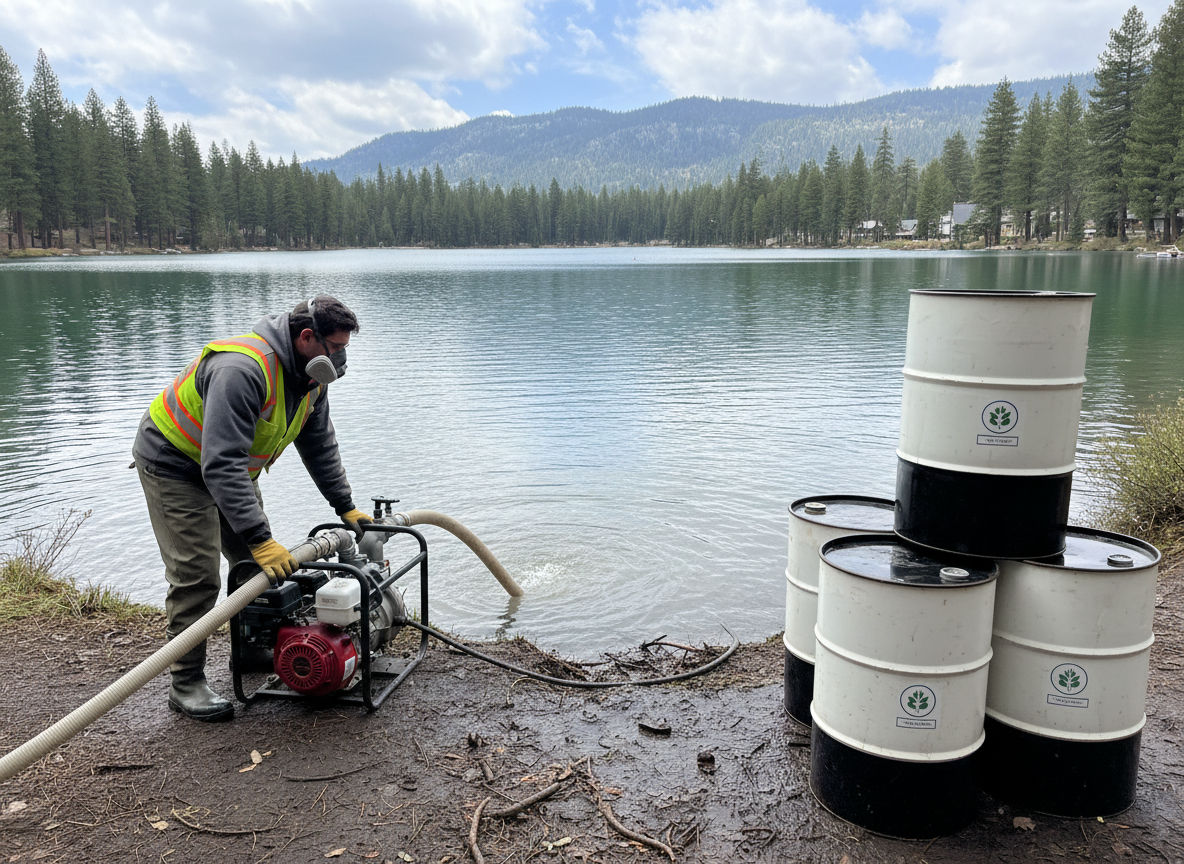
Rimforest sits at elevation in the San Bernardino Mountains where heavy winter snowfall often melts rapidly in spring or during warm spells, driving water under cabin foundations and into crawl spaces. Older homes built before modern drainage standards frequently have dirt floors or shallow footings that allow moisture to wick into subfloor framing. Water cleanup services here start with locating hidden saturation behind knotty pine paneling and inside knee walls rather than stopping at visible puddles on the hardwood. Technicians use moisture meters calibrated for wood species found in local cabins because standard drywall readings miss how cedar and pine hold water differently than sheetrock.
Lake Arrowhead runoff and seasonal creek overflow add another layer when storms push water across sloped lots toward Pine Ave properties. Extraction equipment must handle both clear floodwater and the fine silt that arrives with it, which can embed in carpet pads and insulation. Technicians remove baseboards early to create airflow paths because closed-up mountain homes trap humidity that leads to hidden mold within 48 hours. Edge cases include water that travels along electrical runs in attics, requiring coordination with local electricians familiar with the older knob-and-tube wiring still present in some Rimforest structures.
San Bernardino County building practices emphasize fire-resistant materials, yet many homes retain original wood siding that swells when repeatedly wetted. Cleanup crews document every step with photos because insurance adjusters in the area know how quickly secondary damage appears after the first freeze-thaw cycle. Proper drying targets 12-15 percent moisture content in structural lumber before any reconstruction begins, a threshold that takes longer at Rimforest’s altitude and lower air pressure.
Technician insight
In Rimforest, the thing that catches most people out with Water cleanup services is how snowmelt travels under the shallow foundations of 1950s-1970s cabins and then wicks upward into the subfloor for weeks after the visible water is gone. Homeowners often stop drying too soon because the house feels dry at living level while the dirt crawl space stays saturated.
Spring snowmelt under Pine Ave cabin
Rapid March thaw sent water under a Rimforest home’s crawl space and into the subfloor. Meters showed elevated moisture in joists that had not reached living areas yet. Extraction and targeted drying prevented mold growth and restored the structure without removing original flooring.
How it works
- 1
On-site assessment
Technicians arrive within hours, map all affected zones with meters, and note construction details unique to mountain cabins.
- 2
Water extraction
High-volume pumps and wands remove standing water while protecting original wood floors common in Rimforest homes.
- 3
Drying and dehumidification
Industrial air movers and dehumidifiers run until lumber and insulation reach acceptable moisture levels for the local climate.
- 4
Sanitation and monitoring
Antimicrobial treatment follows extraction; daily moisture logs continue until the structure is dry and stable.
Pricing
Cost depends on square footage affected, depth of water penetration, and whether crawl space or attic access is required; upfront written quotes provided before work begins.