Rimforest sits in San Bernardino County at elevation where heavy winter snowfall piles on older cabin roofs and creates ice dams along eaves. Meltwater works behind fascia boards and into attics, soaking insulation and sheathing that never fully dries before the next storm. Homeowners often discover black growth on OSB or drywall only after spring thaw, when hidden colonies have already spread along ceiling joists and into wall cavities shared with living spaces.
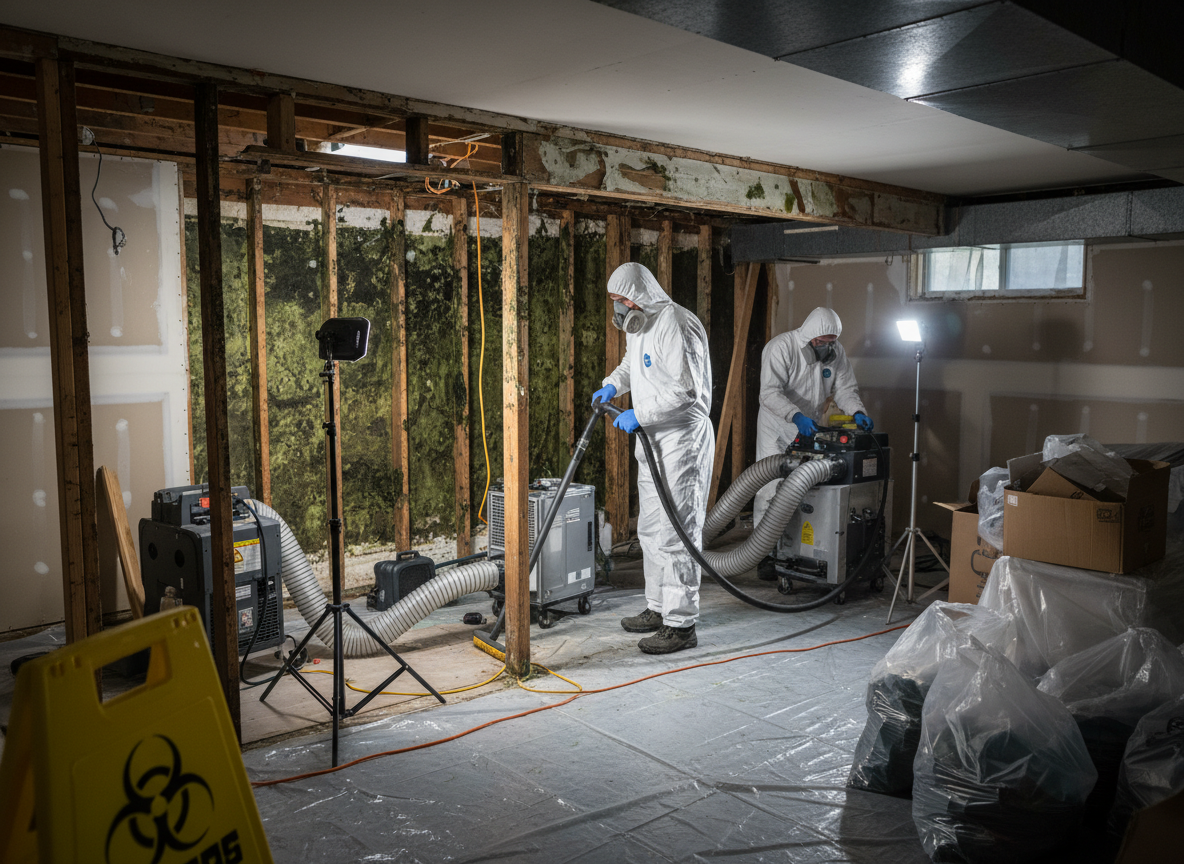
Standard remediation here requires full containment with negative air machines because mountain winds can push spores through ridge vents and into neighboring homes along Pine Ave. We remove affected cellulose insulation, treat framing with EPA-registered antimicrobials, and install dehumidification sized for the cold, damp air that lingers after snowmelt. Edge cases include mold behind built-in cabinetry in 1950s-era homes and in crawl spaces where poor grading lets runoff pool against foundations near Lake Arrowhead.
San Bernardino County building codes require documentation of moisture levels below 15 percent before any new finishes are installed. We run continuous monitoring with data loggers because rapid temperature swings from day to night can reintroduce condensation on previously dried surfaces. Skipping this step commonly leads to recurrence within one season when the next heavy snow load arrives.
Technician insight
In Rimforest, the thing that catches most people out with Mold remediation after water damage is hidden growth in attics from ice dams that form during heavy winter snowfall, especially in the older cabin stock along Pine Ave where roof leaks travel behind fascia and soak insulation that stays damp for months.
Attic Mold After Snowmelt Leak
A Rimforest homeowner near Lake Arrowhead noticed ceiling stains after spring thaw. Inspection revealed mold on OSB sheathing and joists from repeated ice-dam water entry. We contained the attic, removed saturated insulation, treated framing, and ran drying equipment until readings dropped below 12 percent. Follow-up confirmed no recurrence after the next snowfall cycle.
How it works
- 1
Initial Assessment
We inspect attics, walls, and crawl spaces with moisture meters and borescopes to map all affected materials in Rimforest homes.
- 2
Containment Setup
Plastic barriers and negative air machines isolate the work zone so spores do not migrate through the mountain wind patterns common here.
- 3
Material Removal and Treatment
Damaged drywall, insulation, and wood are removed, then framing receives antimicrobial application followed by HEPA vacuuming.
- 4
Drying and Verification
Industrial dehumidifiers and air movers run until readings reach safe levels, then we document clearance with third-party testing when requested.
Pricing
Cost depends on square footage affected, depth of hidden growth in attics or crawl spaces, and whether contents require separate handling.