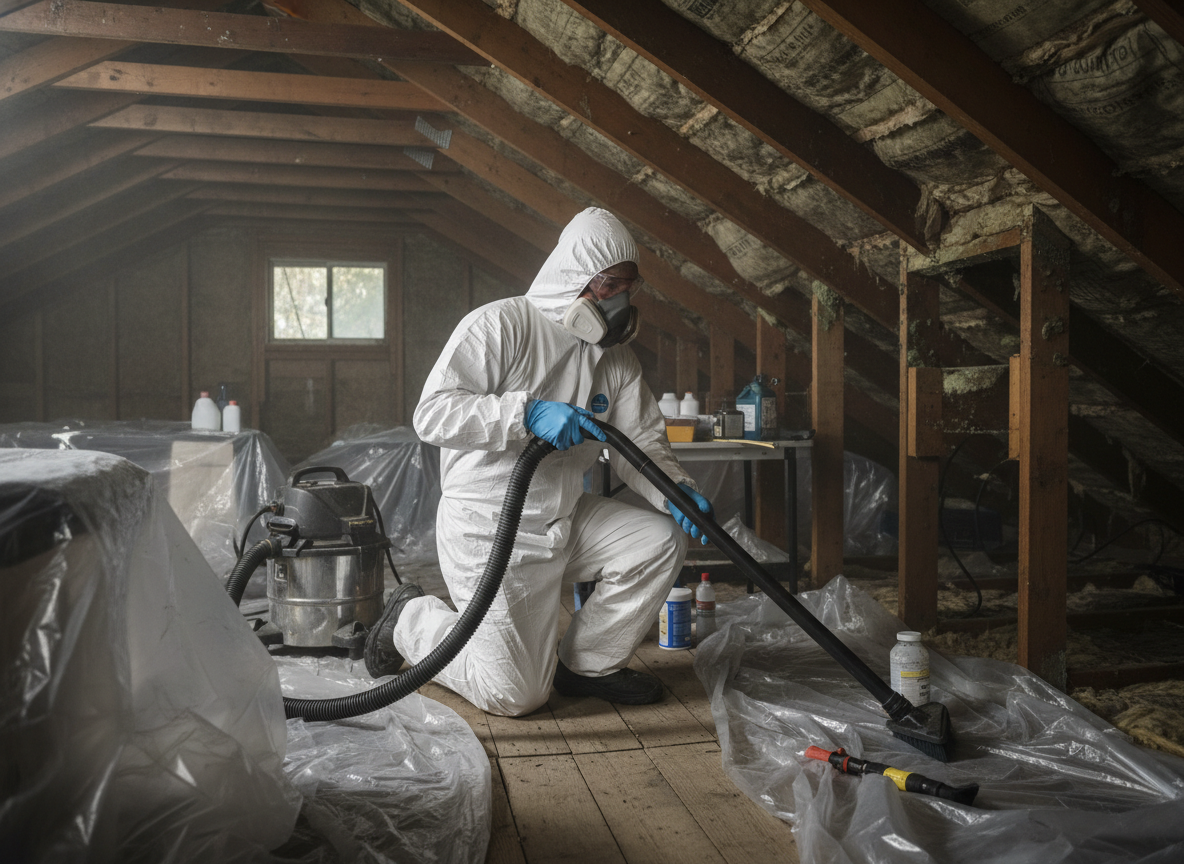
Rimforest sits at elevation in San Bernardino County where heavy winter snowfall routinely leads to ice dams and roof leaks that send water into attics. Older cabins and homes built before modern vapor barriers often have cellulose insulation that holds moisture against roof sheathing, allowing mold to colonize rafters and plywood within weeks. Technicians must remove wet insulation, treat structural wood, and confirm the roof leak source before any rebuilding begins.
Access in these mountain properties is frequently limited by steep driveways and low attic clearances, so crews use negative-air machines and HEPA filtration to keep spores from migrating into living spaces below. Lake Arrowhead-area homes with shake roofs add another layer: hidden rot under the shakes can keep feeding moisture long after the initial leak is patched. Every job requires moisture mapping with infrared cameras and post-remediation verification to meet local building expectations.
Homeowners sometimes attempt bleach cleaning on visible growth, but that leaves roots in the wood and does nothing for hidden colonies behind insulation. Proper remediation here means containing the attic, discarding porous materials, and drying the structure with commercial dehumidifiers sized for the cold, dry winter air that actually slows evaporation. Skipping these steps often leads to recurrence the next heavy snow year.
Seasonal Considerations
Winter snow load increases leak frequency from November through March, while summer heat can accelerate mold growth once moisture is present. Scheduling remediation before the next freeze prevents ice dams from re-wetting freshly treated surfaces.
Technician insight
In Rimforest, the thing that catches most people out with attic mold remediation is how quickly snow melt finds its way behind old cellulose insulation in pre-1980s cabins; once it reaches the bottom plate you end up chasing moisture down interior walls that never showed water stains from the roof.
Hidden Growth After January Snow Melt
A Rimforest homeowner noticed ceiling stains after a heavy snow. Inspection found saturated insulation and black growth on rafters above the living room. Crews contained the attic, removed wet material, treated the sheathing, and dried the space over four days. The roof leak was sealed and new insulation installed once moisture readings stayed below 12 percent.
How it works
- 1
Inspection and Moisture Mapping
Technicians assess attic access, locate active leaks, and document moisture levels in insulation and framing.
- 2
Containment Setup
Plastic barriers and negative air machines isolate the attic from the rest of the Rimforest home.
- 3
Removal and Treatment
Wet insulation and affected materials are removed, then wood surfaces receive antimicrobial application.
- 4
Drying and Verification
Commercial equipment dries the space, followed by moisture meter and visual checks before re-insulation.
Pricing
Cost depends on attic size, depth of insulation removal, and whether roof repairs are needed before treatment.